November 03, 2025
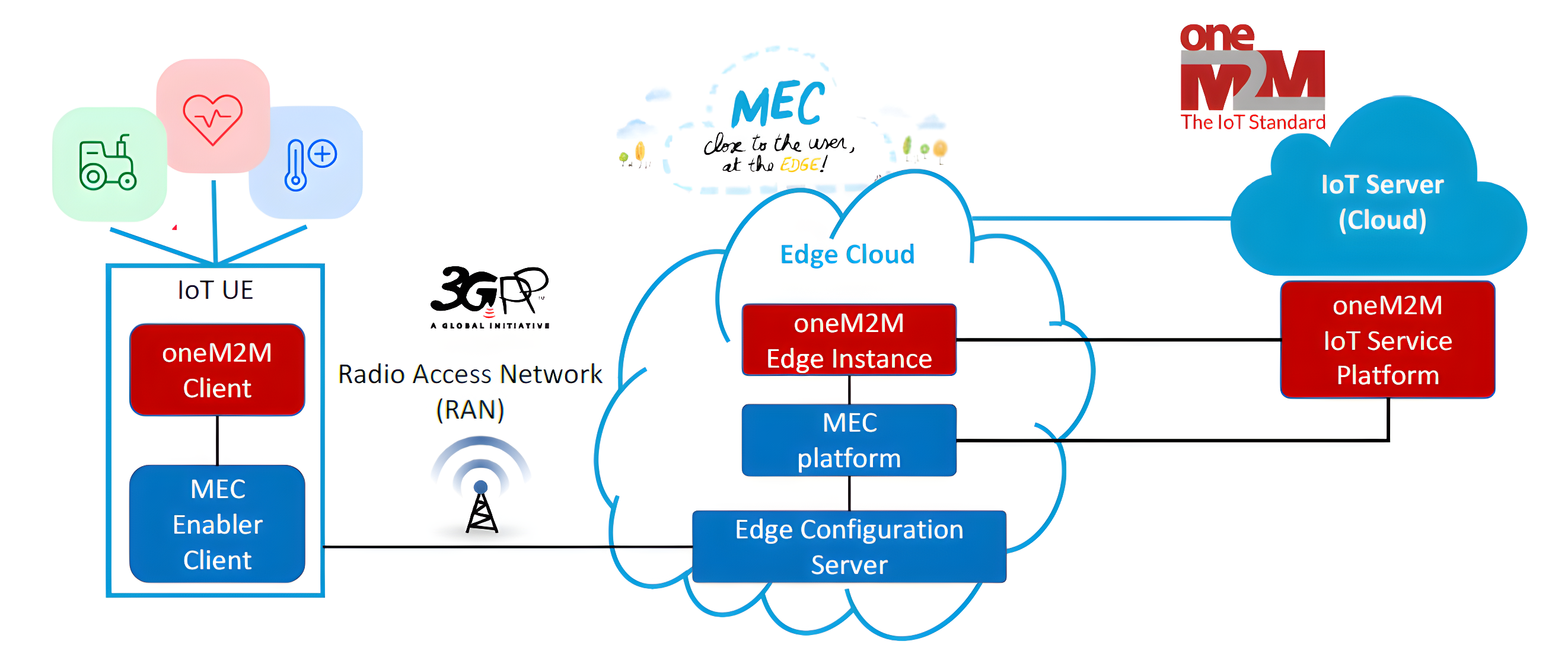
The first ESTIMED Hackathon took place remotely from October 28 to October 30, 2025, bringing together a diverse group of innovators to explore the potential of oneM2M and ETSI MEC standards for next-generation IoT-edge solutions. Organized under WP6 – Dissemination and Ecosystem, the event marked a key milestone for the ESTIMED project, providing an environment to validate and showcase the interoperability and combined capabilities of the oneM2M and ETSI MEC standards.
A Three-Day Global Event Focused on Standardized IoT-Edge Innovation
The hackathon attracted five international teams spanning SMEs and universities:
- xFlow Research Inc. – Pakistan
- FSCOM – France
- Green Box – Egypt
- Sejong University (SESLab) – South Korea
- Scuola Superiore Sant’Anna (SSSUP) – Italy
Participants tackled real-world challenges across smart cities, industrial automation, maritime logistics, and public safety, all while demonstrating interoperability between oneM2M and MEC technologies.
Advancing IoT–Edge convergence through open standards and global collaboration
Program Structure
Across three days, the event combined technical presentations, development sessions, and live project demonstrations:
- Day 1: Opening session, ESTIMED overview, and technical onboarding (MEC Sandbox, ACME, tinyIoT, tutorials, guides).
- Day 2: Dedicated primarily to Technical and development session (Round 2), with participants focused on developing their project.
- **Day 3:**Final Submission of results, Participants’ presentation (20 minutes each), Evaluation (off-line) by the Evaluation Board, and the final Award ceremony.
Challenge Tracks
Participants addressed the following key tracks:
- Track #1: Identification of innovative use cases leveraging oneM2M–MEC interworking.
- Track #2: High-level architecture design based on interoperable IoT-edge components.
- Track #3 (Optional): Prototype development using available MEC and oneM2M open-source tools.
All technical materials were submitted via Hackster.io, supporting transparency and future reproducibility.
🏆 Hackathon Results
After reviewing the submissions, the Evaluation Board—comprising experts from ETSI MEC, oneM2M, CNRS, Digital SME, Deutsche Telekom, and JK Consulting—selected the following winners:
🥇1st Place – Scuola Superiore Sant’Anna (Italy)
Interoperable oneM2M–MEC architecture enabling automated vessel berthing operations
Project focused on an Interoperable oneM2M–MEC architecture enabling automated vessel berthing operations.This project proposed using real-time edge computation and oneM2M for data storage and sharing to automate docking and logistics of unmanned vessels, aiming to improve efficiency, safety, and environmental impact in maritime logistics
🥈2nd Place – xFlow Research Inc. (Pakistan)
EdgeTwin Logistics Framework
Project detailed the Synthetic Edge Twin (SET) Framework, a standards-based architecture combining oneM2M for IoT device abstraction with ETSI MEC Sandbox APIs for edge-native network simulation. The primary use case demonstrated was Predictive Cold Chain Monitoring for real-time logistics management
🥉3rd Place – Sejong University (South Korea)
Inclusive Edge Safety Service for Pedestrians with Reduced Mobility
Project proposed an Inclusive Edge Safety Service for Pedestrians with Reduced Mobility, integrating oneM2M and MEC standards to provide real-time safety alerts by analyzing sensor data at the edge, reducing latency, and securely sharing information with caregivers and authorities
4th Place – FSCOM (France)
Vulnerable user detection scenario and deployment in smart city based on ETSI C-ITS, ETSI MEC and oneM2M standards and architecture This use case focused on a vulnerable user detection scenario within an ETSI MEC/5G environment.The solution is based on oneM2M, ETSI MEC standards and architectures, incorporating cars, pedestrians, and road side units (RSUs).
5th Place – Green Box (Egypt)
Distributed Edge AI for Predictive Maintenance & Emergency Response (MEC & oneM2M) Green Box is described as a self-sustained edge-AI platform for real-time predictive maintenance and emergency detection in various environments, including industrial, maritime, and aviation settings. The system integrates MEC, oneM2M, and federated learning to form a resilient, energy-efficient, and globally interoperable network.
🏆 Awards and Recognition
All participating teams received ETSI-signed certificates, while the top three teams were honored with an exclusive awards package, including:
- Commemorative plaques celebrating their achievement
- Certificates of appreciation issued by ETSI and the ESTIMED consortium
- A one-year Tech Learning subscription granted to each team member, supporting their continued growth in IoT and Edge Computing.
Building Momentum Toward Future Hackathons
The ESTIMED Hackathon #1 successfully demonstrated the value of standardized IoT–Edge integration and highlighted a growing community of developers ready to contribute to interoperable architectures. The event sets a strong foundation for the next hackathons planned for 2026 and 2027.
For future announcements and additional resources, visit the ESTIMED Events page.
About ESTIMED
ESTIMED is a collaborative initiative aligning open standards from ETSI ISG MEC and oneM2M into a unified platform, empowering developers worldwide to build scalable, interoperable IoT-edge solutions.
Press contact:
CNIT